What is Dyslexia?
Dyslexia… is a difficulty with language, especially at the level of reading, that is unexpected in relationship to the experience of the child. – Dr. Louisa C. Moats
Dyslexia is a language-based learning disability. This disability is reflected in a difficulty in learning to read, write, spell, or sometimes speak, in spite of normal or above average intelligence. The most universal symptom is difficulty in remembering and manipulating symbols, especially letters and numbers and their sequences. The disorder often appears to run in families. Many people with dyslexia are never identified, but are classified as lazy, slow or underachieving.
Dyslexia occurs in people of all backgrounds and intellectual levels. People who are very bright can be dyslexic. They are often capable or even gifted in areas that do not require strong language skills, such as art, computer science, design, drama, electronics, math, mechanics, music, physics, sales, and sports.
Famous and
Successful Dyslexics
- Beethoven
- Leonardo da Vinci
- Walt Disney
- Albert Einstein
- Thomas Edison
- Whoopi Goldberg
- Bruce Jenner
- John F. Kennedy
- Charles Schwab
- Henry Winkler
“Scientists have discovered that almost all cases of dyslexia reflect a problem in getting to the basic sounds of words. Children who are dyslexic are unable to attend to the individual sounds (called phonemes) making up all words. For example, the word “bat” has three phonemes–b-aaaa-t. It is important for children to be able to detect the individual sounds making up a spoken word because that is how they go about solving the reading puzzle.”
Sally Shaywitz, M.D.
"A Conversation with Sally Shaywitz, M.D., author of Overcoming Dyslexia” (July 28, 2003)
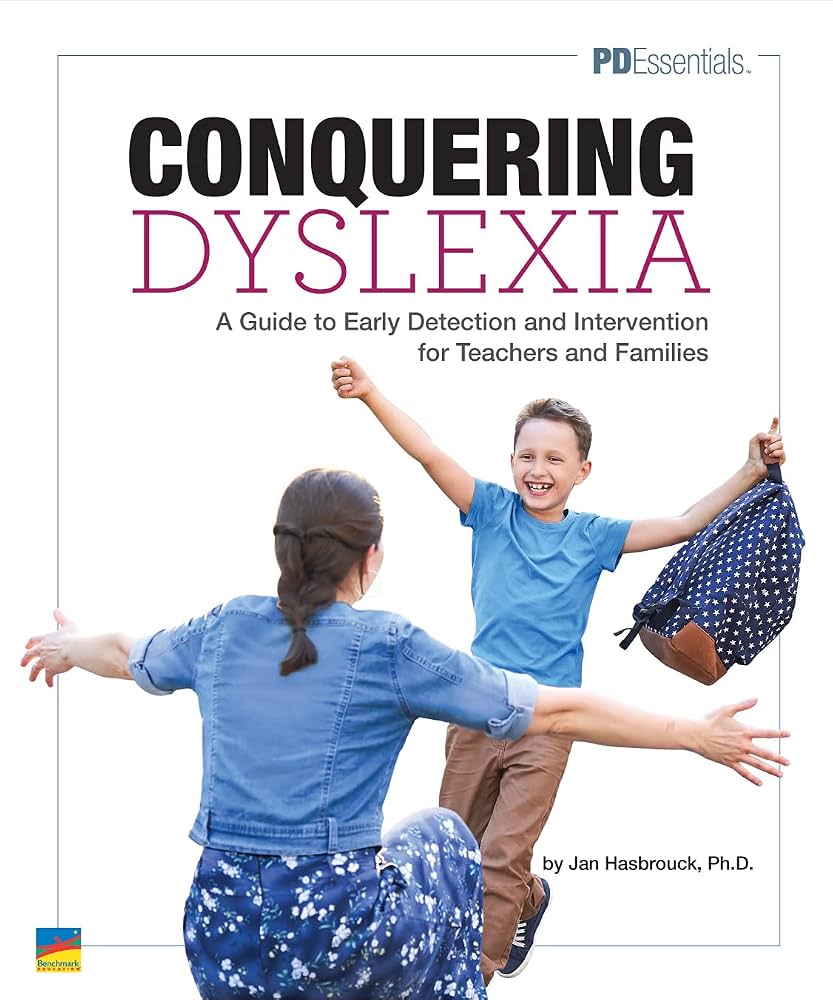
Dyslexia is no longer a mystery. MRI scans and other tools of neuroscience have advanced our understandings in the last decade. We now know what to do to help students become skilled, confident learners. In Conquering Dyslexia, Dr. Jan Hasbrouck shares the instructional approaches that work best for children who have this disorder, and the most current information for parents so they can advocate for their children and communicate with educators effectively.